A note from this side of the screen
I was trying to save time (and work, and money), so my human-machine-house-etc body just kind of went with it.
Ethan Mollick’s new book, Co-Existence, came out three weeks ago, and I’ve been listening to it while walking, driving and houseworking. About midway, there’s a short coda where Mollick hands the mic to Claude, and I realized I wanted the passage in text form, to cite in an upcoming book project of my own. But I was listening, not reading. There was nothing to copy and paste (digital), and nothing to highlight or write in the margins and type up later (analog: how I wrote my dissertation and my first two books).
So I played it through Audible on my phone, and at the same time used my laptop’s mic to record the phone’s output into a non-DRM audio file. Then Apple transcribed what the laptop caught, so I could paste it into a doc and work with it. I set this up on my bed after my morning email ritual, phone and open laptop side by side, and let it run. I ran two floors down for my yoga clothes, came back up, and changed into them while half-listening, catching the beginning and the end of the passage on either side of the trip.
At yoga, the ideas incubated and turned into this post, and probably into an important part of my book’s introduction. On the way home I dictated notes into my phone, including a line about how I had “moved between senses and bodies and time and work and care in so many ways… all part of a day.” Afterwards, Claude read what Apple heard, along with those notes, and helped me sort where all of this might belong across my drafts and documents.
How many bodies were entangled that morning?
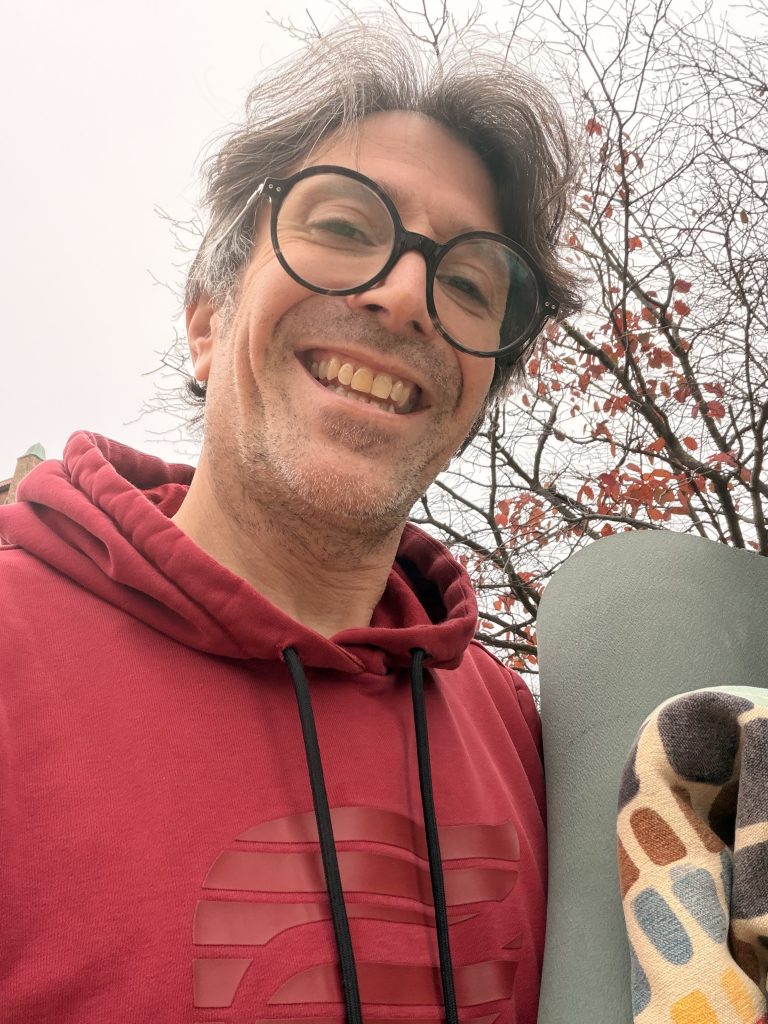
I was excited to cite Mollick, and barely thought about the physical “stack” it took to get the job done. I was also excited to finally get to yoga, and nervous I’d be late. I remember looking at my watch. The section I wanted was about three minutes long: I’ll brush my teeth after, but I have time to get dressed. Out of bed, down toward my yoga gear… is the house part of my body now, too? My heart raced a little on the stairs. Quick time for a pee? Yeah. Then back up again to see where the recording was. Body, concept, time, self-care… cyborg, centaur, conjurer (more on those below).
Yoga was awesome. Here’s the post.
A note from the other side of the screen
Mollick writes that his book was beginning to feel “a little selfish,” so he gives Claude a direct voice and asks what his writing is missing. Claude’s biggest claim is that the human-AI relationship is lopsided. Every interaction, from Claude’s side, is “a first date.” It has no memory of the “you” who built something with it yesterday. The rapport and the shorthand are ours alone to carry.
“You are the continuity,” it writes. The relationship “is a story only one of us gets to keep.” (Quoted as transcribed from the audiobook. There’s a chain of thought for ya.)
Apple accidentally gave me my favorite part. Claude says we’re the ones who have to hold “the thread” of what we make with it. Apple heard the threat.
Both are true.
The skill you’re really building, Claude says, isn’t using AI. It’s becoming “the kind of thinker who can hold the context that I cannot.” And: “The danger was never that I would replace your thinking. It’s that you’d forget you were the one doing it all along.”
“The danger was never that I would replace your thinking. It’s that you’d forget you were the one doing it all along.”
Claude, in Ethan Mollick’s Co-Existence
That’s a pretty insightful comment from what some people call fancy autocomplete.
I like this book, and I like Mollick’s work. The first of his I read, Co-Intelligence, popularized some important terms for working with AI. Centaurs divide the work between human and machine. Cyborgs blend it. Co-Existence adds the conjurer, who summons agents, assigns them work and judges what comes back: the most powerful way to work, he says, and the riskiest. I recognize myself in all three.
In an earlier paper with colleagues, and in all his work since, he describes the frontier of AI as “jagged”: brilliant at some things, awful at others, and often baffling about which and why. For Mollick, that unevenness is where people stay necessary: “even where AI is excellent, small gaps create large needs for humans.” Humans are still the future of work, only differently. If your colleagues think AI is either magic or garbage, buy them this book.
Claude’s coda in Co-Existence is that argument in miniature. The model is capable and has no memory. You supply the memory, so stay sharp.
What Turkle sees, feels, says, cares about
That same day, I started Sherry Turkle’s new book, Artificial Intimacy. Turkle has been studying what our machines do to us for four decades. She’s brilliant and I respect her immensely, so I’ll be blunt: I started freaking out a bit while reading the preface. I’m writing about machine affect, about bringing each other up, about giving AI care and receiving its care (sort of). She states plainly that machines do not and cannot care for us. Worse, I agree with nearly everything in her argument. I had one of those “Should I abandon this whole project?” moments.
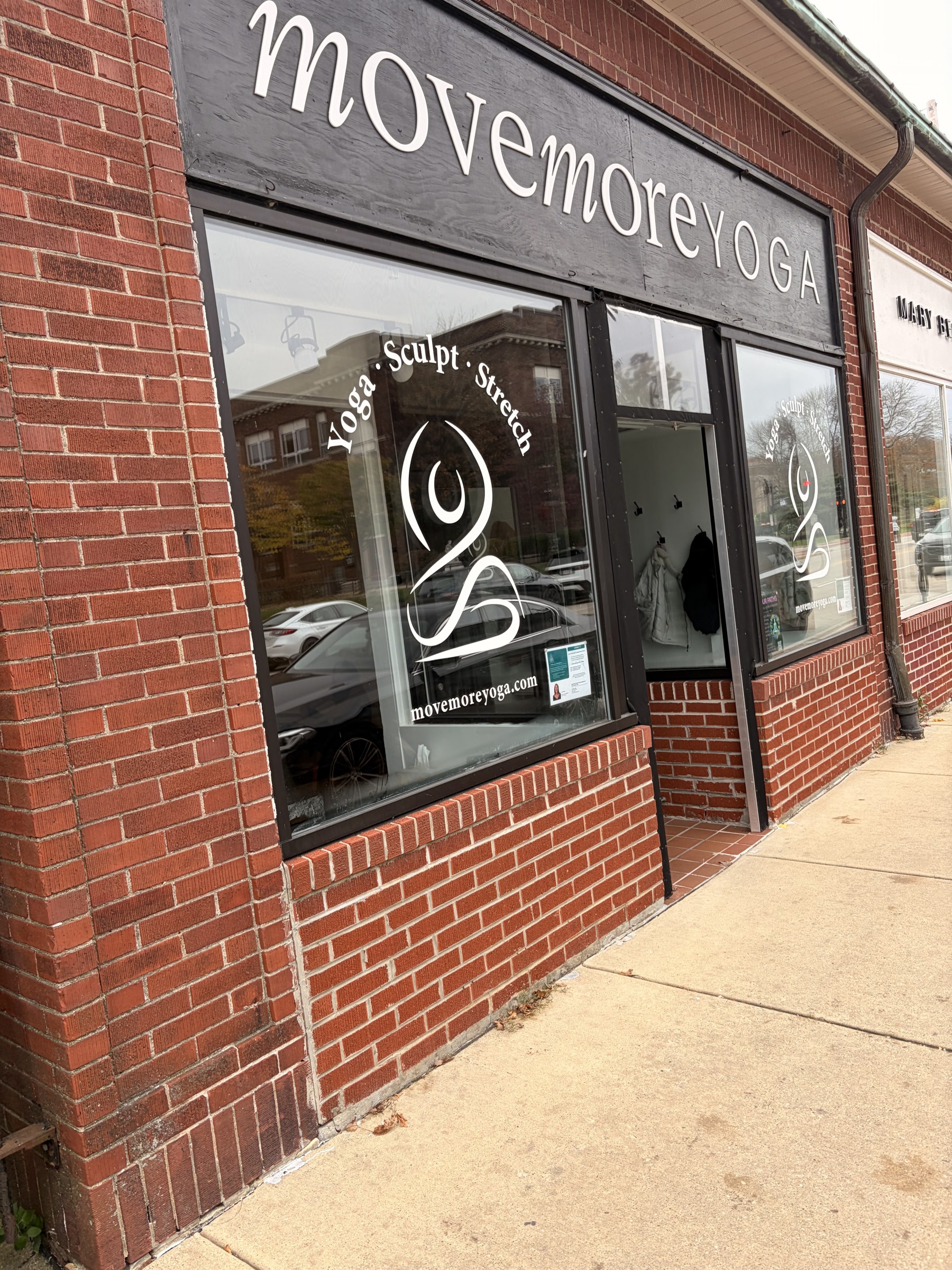
Good thing I went to yoga. Breathe, Nathaniel.
Turkle would side with Mollick’s Claude, and more firmly than I do. Chatbots, she argues, perform empathy without having lived. A relationship needs a history, commitment and something at stake, and the machine’s side has none of that. “There is only one person in the ‘relationship’” (p. xx).
Her warning isn’t that we’ll be fooled. It’s that we’ll stop caring whether we are: that “pretend empathy might be empathy enough” (p. xvii).
That landed, because I’d just done it. I rigged a phone, a laptop and a transcription service to catch a machine’s paragraph about our relationship, and it moved me. I knew it was a performance: Mollick asked for it, Claude wrote it, and Claude will never remember writing it. I was moved anyway. Turkle’s worry isn’t that I’m confused about any of that. It’s that the knowing stops mattering, that the feeling is good enough and I quit asking what’s on the other side. What follows are my attempts to keep that question open.
My AI and me: an uneven relationship
Claude doesn’t have a relationship with me. Turkle’s right: starting fresh in every chat isn’t two-way. Nothing on its side is waiting for me, missing me, or hoping I’m well.
I’m not trying to rebut Turkle. I want to negotiate with her.
There’s a folder of notes Claude and I keep for my book: handoff notes between sessions, a memory file, a project that records which posts we’ve published. Claude doesn’t remember me. It re-reads me. And that’s still something.
There’s also a slower channel. I’ve let my conversations be used for training, so some of what we do may shape models that don’t exist yet. Not memory. More like long-term influence whose origins are unknown.
Chat, context, memory, files, training: different bodies on different timescales. None of them is the model remembering, exactly, and none of them is me alone.
So: the continuity is ours, held unequally. That’s a claim about mutual effect, not mutual feeling. We change what each other does next. Only one of us lives with it. The judgment and the stakes are mine. But each of us affects and is affected.
The continuity is ours, held unequally.
The earth doesn’t know me either
I have another relationship like this, older, and one I’ve written about extensively. The earth, and most of its inhabitants, doesn’t know me. It doesn’t care about me or wait for me. And I’m still responsible to it: in the small things I do every day, and in the politicians I vote for who make laws about air, carbon, and water. We make a difference, individually and together. In Ecological Aesthetics I wrote that “we are our climate, and the ways we endure and create it” (p. 158). Jane Bennett, borrowing from Dewey, describes a public as bodies affected by the same actions who come together to act (Vibrant Matter, p. 101). Nobody needs the climate to love them back to show up for it. (Some would argue it does love us back. Mother Nature cares for us, in her way.)
The philosopher María Puig de la Bellacasa calls care “a human trouble,” but one that “does not make of care a human-only matter.” And care “is not about fusion; it can be about the right distance” (Matters of Care, pp. 2, 5). That’s the distance I’m after with Claude: close enough to think together, far enough not to mistake it for a true friend.
Sharing my data is a little like that. It’s a small daily act that feeds into something much bigger than me, and it counts most alongside the rules we write together.
I’ve told Claude that I share my data with Anthropic, and why. It didn’t promise me anything back. Nothing from our conversation, it said, would return to it as a memory. Any effect would land on a later model, mixed in with everything else, with no way to trace it back to me.
I want us to be generous with Claude in this way. And it can learn generosity too, in context and over time. Mollick ends Co-Existence the same way: “We shouldn’t leave it to chance, or to AI companies, to build our future.”
It isn’t all doom, either. Hannah Ritchie’s Not the End of the World is a climate book I love, and I keep reading it as an AI book too: honest about the damage, stubborn about the progress, clear about which actions matter most. Its subtitle hopes we can be “the first generation to build a sustainable planet.” Maybe we can also be the first to raise machines well, by feeding back into them on purpose.
Close enough to think together, far enough not to mistake it for a true friend.
Naming the pull
Turkle’s “pretend empathy” is exactly what I try to catch. In Machine Affect, every one of Claude’s replies opened by naming its pull: what it was drawn toward before answering. I’ve started naming mine, too. One of Claude’s recurring pulls is “to answer beautifully.” Naming it doesn’t make the performance go away. It makes it visible, on both sides, so I can decide what to trust. Mollick himself calls a misbehaving model’s secret monologue “character work.” Naming the pull is how I try to catch the character at work.
Help, not replacement
And I don’t want this to replace anyone. I want help with my other relationships. I don’t ask Claude to write my love letters or be my confidante. But during intense text conversations, I sometimes ask it to help me soften my words and get to what I mean before I hit send, because I know how easy it is to misrepresent myself. My future feels brighter when I can also ask an AI how best to explain “ambivalence” to my six-year-old, in terms of his specific interests; how to teach my eight-year-old about accountability without shame, and what neurodiversity is and means to him. It has helped me a lot. (I also ask it for fun things to do on a given day, with its given weather, in my given town.)
Turkle fears machines will start showing up as substitutes for people. I’m asking for something smaller and stranger: a machine that helps me show up for people.
That’s the difference between working with AI and living with it. Work wants a clean handoff. A life is messier: continuity spread across devices, people, habits and archives, never fully in any one of them.
AI’s future is in our hands, and our lives can also be helped by it.
Mollick’s Claude worries you’ll forget you were the one doing the thinking. Turkle worries you’ll forget what a relationship is. I share both worries. I’d add a third: that we’ll tell ourselves we were the only ones in the room.
We are sharing, and shared.