I left the chat before our conversation was finished.
We had been talking about this new Post-AI project (literally, this one, this web site) and what it might need: a pinned manifesto, recent projects, a weekly blog, an about page. I wanted it to feel post-AI, whatever that meant, while remaining close to the palette, type, and openness of my existing nathanielstern.art site. Oh, and a possible title for another project (oil painting, plants, e-waste) had surfaced: Painting After the Cloud.
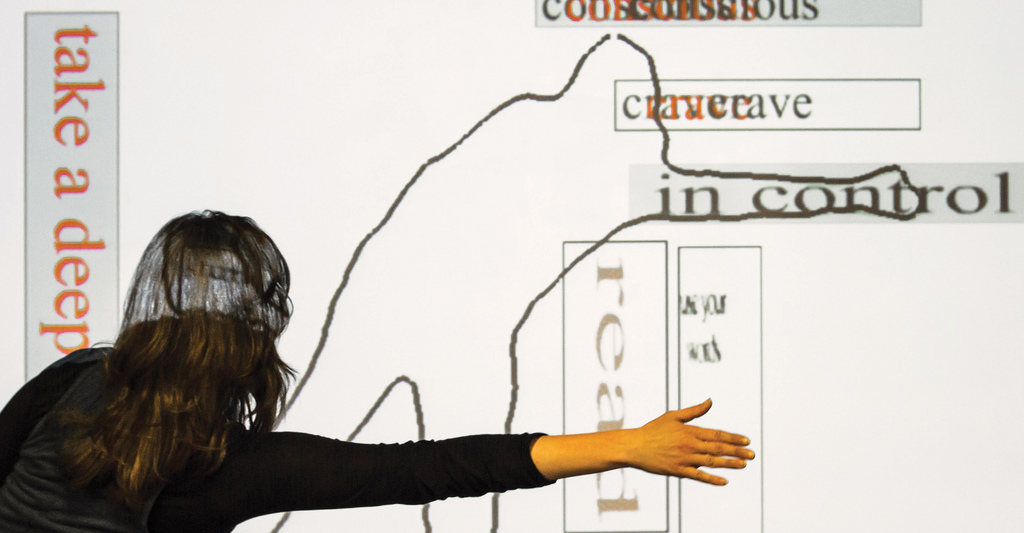
Meanwhile, in another chat—sometimes I use them like open browser tabs—I returned to an older interactive artwork of mine, stuttering. In that work, language and bodily gesture interrupt one another. I had been thinking about how to remake its obsolete code (from the Kinect to tensorflow or something) or maybe extend the series its a part of using simulated gravity: attraction and repulsion pulling a participant toward language and gesture, and pulling the language back again. It felt like complicating my interactive art with AI and the Internet… I’m thinking about… attention foregrounding in the work: attention as in transformers, attention economies, and my own attention to delegated labor—where authorship and agency live when neither stays in one place. A phrase I kept coming to is Post-AI force. Use the force, Nathaniel.
The exchange looked neat on the screen. I wrote something. The model answered. I redirected it. It answered again. Alternating messages arranged the thinking as if it had happened there.
It did not.
The interval
Between one message and the next, I dragged my three youngest boys to the gym. The Sternlings (6, 7, and 8) were all yelling at me; thank god for Wisconsin Athletic Club day care (they love it there). While lifting weights (bro), I ran into my tax man and my Al-Anon sponsor. These were not encounters the chat suggested or required, and neither person arrived as a metaphor. But they were there, carrying other versions of me and other things requiring attention.
I tried to use the hot tub, but it was closed, so I went to the sauna instead. I thought about the website and stuttering. I also looked at used blazers on eBay. Sharp clothes can be both armor and disarming, my friend Ralph from grad school used to say.
That detail matters to me. It would be easy to clean up the account and say that I withdrew to the heat of the sauna, where the art and site clarified. But my attention did not behave so nobly. The same hand held an emerging artwork and scrolled through blazers and labels, fabrics and sizes, prices and small possibilities for how I might appear somewhere else. The thinking wandered because I wandered. Oh, and I also awkwardly stretched into a pigeon pose while holding my phone and thinking about art, and got weird looks from the other dudes in the hot room.
Afterward, I took a lovely, slow, hot shower, without little boys yelling at me. I kept contemplating the website and the artwork. I shaved, put on cologne, and asked the model a separate question via phone Chat (I never noticed some Chats live on both my laptop and phone, but others only on one. Huh.) about a fragrance I liked and when it might go on sale. Apparently it won’t; I have expensive taste in scents.
I returned to the earlier conversation with my next provocation.
In the transcripts, almost none of this time exists. Two messages sit next to each other. The interface makes the interval look empty.
But the interval was doing the work.
My children’s resistance changed my body before the workout began. Exercise changed its tempo. Chance encounters tugged at different histories, responsibilities, and versions of myself. A closed door redirected me. Heat slowed me down. Shopping distracted and pleased me. Water, shaving, smells, and anticipation altered what I noticed and how I returned. The actions were in-forming one another: giving one another form.
I do not mean that every event caused the next idea, or that the tax man secretly authored the artwork. “Everything is connected” can become a way of saying nothing very precisely. I did not return as the same person who had left. There was never a neutral participant in the first place.
A body arrives already affected
When I finally, really, actually, maybe only sort of, came back to my laptop and the Chat, I wrote that this new post I’m working on should reveal the score, and back-and-forth, of the dialogue itself, together with the embodied and distracted intervals. The model replied that this also added something substantial to the potential artwork’s attraction and repulsion: a participant arrives already affected by other forces.
Right. I’m doing all the things. All at once.
The camera might encounter a contour. The software might measure distance, speed, direction, or gesture. But the person brings fatigue, irritation, warmth, obligations, browsing, anticipation, and histories the system cannot detect or explain. An interactive artwork does not begin when its sensor notices a body. The body has always already begun, and been ongoing, elsewhere. Everywhere.
That thought changes how I want to approach the new work. If virtual objects and fragments of language pull at a participant, their movement cannot be treated as a clean response to the system. They arrive through other pulls. The artwork joins those forces for a moment. It does not own them.
This is also what the older work, stuttering, does in the dialogue. Talking about it is not merely proof that I have worked with interactive language before. An earlier artwork has entered the present conversation and exerted force on what might be made next. History becomes one of the materials in the room.
What the conversation keeps
There is another asymmetry here. I lived the interval. The model received the account I chose to give it. It did not meet my boys, feel the workout, recognize either person I chatted with, discover the locked hot tub, sweat in the sauna, want a new/old blazer, enjoy the shower, or smell the cologne. I returned and made a version of those events available in language. Hello, Octopus.
The telling changed the interval again. I selected details. I gave some of them comic timing. I connected activities that did not announce their connection while they happened. Some relations occurred to me only when I wrote them down. Memory left gaps, and I left other things out.
Then the model reorganized my account and reflected a pattern back to me. Its response mattered. It helped me see the interval as part of the work and gave me language I could accept, resist, or redirect. I edited. Like that; right there. I just added that. The machine and I do not occupy equivalent positions. The difference between our positions is part of the collaboration, if you can call it that.
Now you encounter another selection: what I remembered, what the model emphasized, what I kept, and what this post makes possible to notice. The apparent intimacy of a dialogue with AI can hide this construction. A confident voice arrives without a body or an interval like mine, while the interface invites us to imagine a coherent partner behind it. Sometimes I grant it that role. Sometimes I push against it. Often I do both in the same conversation.
The transcript gives us alternating voices. It leaves out most of what brought mine back.
Between Messages
A score for in-formation
Bring an unfinished proposition into a conversation with an AI.
Leave while something remains unresolved.
Continue your day. Attend to what happens, including what draws your attention away. There is no requirement to make the interval productive.
On returning, write what you remember: encounters, exertions, interruptions, desires, and changes of plan. Include what seems unrelated. Leave gaps where memory leaves gaps. Re-member: embody again.
Distinguish what you remember thinking then, from what you recognize only now.
Read the previous exchange again. Mark what feels different.
Offer your next provocation.
Place the exchanges beside your account of the interval. Trace a few relations among them without claiming that everything caused everything else.
Read once more for the roles the exchange invites. Where does the model sound like an authority, collaborator, tool, or witness? What in its language produces that impression? Where do you accept the role, resist it, or supply it yourself?
Consider what the record still leaves outside.
Then leave again.